Wile 55 and Wile 200are two different portable moisture meter approaches used for rapid field control of grains and seeds. Wile 55 is a simpler and more compact humidity controller; Wile 200 is a higher-end model that offers additional information such as larger sample, guided use, hectoliter weight and temperature. The right choice is “which is better?”rather than “what data do I need, at what speed and in what environment?”It depends on the question.
Feature comparison of Wile 55 and Wile 200
| Criterion | Wile 55 | Wile 200 |
|---|---|---|
| Basic use | Fast portable moisture control | Advanced portable grain evaluation |
| Measured values | Moisture | Moisture, hectolitre weight and temperature |
| sample approach | Compact measuring chamber | Larger sample chamber;volume is verified with delivery version |
| Analysis time | Fast field measurement | 7 sub-second measurement |
| User experience | Simple screen and transaction flow | Directional, backlit display |
| Result average | Depends on user's repeat measurement schedule | Automatic averaging support |
| optimal scenario | Field, harvest, small and medium-sized rapid control | Professional receiving, warehouse and multiple quality indicators |
Specifications may vary depending on device version and installed product scales. Product list and measuring range must be verified before quotation.
Wile Who is 55 more suitable for?
Wile 55 portable grain moisture meteris designed for users whose main need is “quickly checking the sample in the field”. Farmer, combine operator, warehouse manager or purchasing team; It can be used for harvesting decisions, drying needs and preliminary control at the warehouse entrance.
- Those looking for a compact structure that can be carried with one hand
- Workflows where moisture measurement is sufficient
- Limited number of products and regular field inspection
- Businesses that will employ more than one operator with simple training
Wile The strength of the 55 is its simplicity. On the other hand, a second measurement system may be needed in businesses that require hectoliter weight or more detailed recording.
Wile Who is 200 more suitable for?
Wile 200 grain moisture and hectolitre meteris aimed at businesses that want to evaluate the moisture result together with product density and temperature information. Large sample volume helps reduce the risk that a small subsample may not be representative of variability within the batch;however, it does not eliminate the need for accurate sampling.
- Intake points needing hectolitre weight with moisture
- Intensive season work on different products such as wheat, barley and corn
- Users who want screen orientation and automatic centering
- Businesses that need software/scale updates via USB
Selection according to usage scenario
“Should I start harvesting in the field?”
If easy transport and fast moisture control are priorities, the Wile 55 may be sufficient for most users.
“I want to see the hectolitre as well as the moisture in the product entering the warehouse.”
In this scenario, Wile 200 is the more suitable option, reducing the need for two separate devices.
“We accept hundreds of vehicles a day and we must feed the results into the system.”
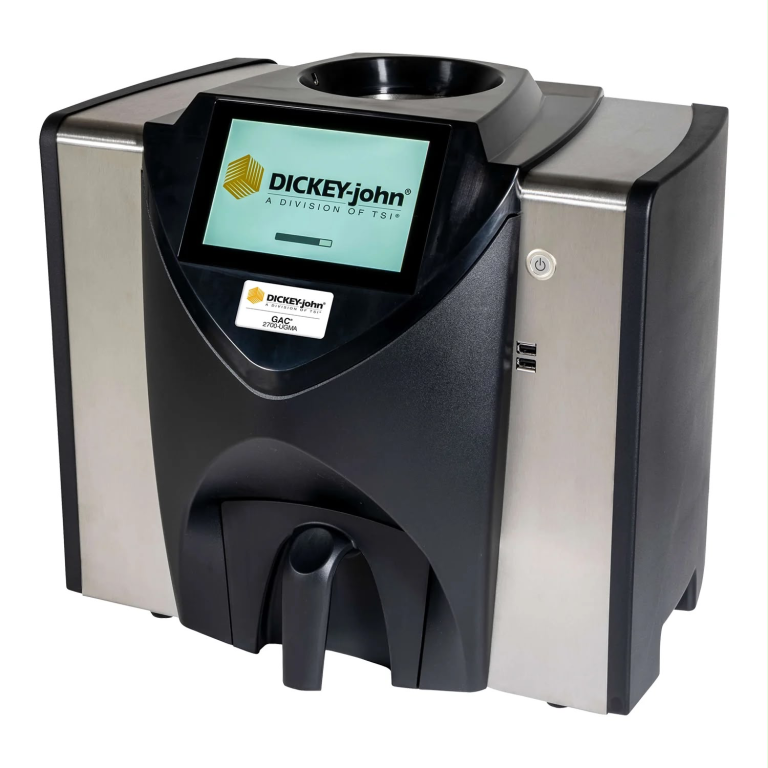
This need may extend beyond the portable classroom. For automatic sample flow, printer, barcode and registration features GAC 2700-UGMA Professional desktop devices such as should also be compared.
“Different users will measure.”
Wile 200's guided workflow may be useful; However, a brief operating instruction must be prepared for both devices, specifying the number of sampling, filling, cleaning and repetition.
Common usage rules for more reliable results
- Prepare a composite sample representative of the batch.
- Verify correct product calibration and expected measurement range.
- Do not leave excessive temperature difference between the device and the sample.
- Keep the chamber clean and dry before each measurement.
- Take multiple measurements from the same sample; Watch the range of results.
- Compare with laboratory reference results at the beginning of the season and at periodic intervals.
- Do not change the correction/bias setting based on a single sample.
8 question to ask before buying
- Are all the products I will measure installed on the device?
- What is the supported moisture range for each product?
- Do I really need hectolitre and temperature information?
- How many samples and operators per day?
- How are calibration/scale updates done?
- How is user correction managed based on reference results?
- Warranty, spare parts and technical service What is its scope?
- Can I test and verify the device with my own product sample?
To see both models together Check out Wile grain moisture meters and other moisture instruments. Your sample type, usage environment and required parameters Get model recommendations by sending it to MAK Analiz experts.
Model selection by scoring method
Weigh the needs rather than making the decision based on product price alone. Give importance score 1–5 to the following criteria; Score and multiply each model's equivalent between 1–5:
- Portability: Will the device be transported throughout the day between the field or different storage points?
- Parameter scope: Is it just moisture or are hectolitres and temperature also required?
- Sample representation: Is larger sample volume important to the process?
- Operator convenience: Will guided display and automatic averaging reduce the risk of error?
- Data and update: USB, does it need a software update or registration transfer?
- Budget and frequency of use: Do the additional features add value to the actual business decision?
This method makes it visible why Wile 55 stands out in most small businesses, and Wile 200 stands out in receiving/warehouse processes with more parameters and intensive workflow. If the number of daily samples is very high, both models may be insufficient in scoring and the desktop automatic system may be more economical.
Cleaning, storage and season preparation
Dust, broken grains or oilseed residue remaining in the measuring chamber can change the electrical behavior of the new sample. Clean the hopper using the dry method recommended by the manufacturer; Check instructions before using liquid or corrosive chemicals. Protect the device from sudden temperature changes, direct sun, rain and heavy condensation. If not used for a long period of time, follow the battery and storage recommendations.
At the beginning of the season, a physical check, mechanical condition of the battery, display, chamber/lid and repeatability testing with a known control sample should be carried out. Businesses using more than one Wile device can make comparisons between devices on the same homogeneous sample. If a difference is seen, it is not possible to decide which device is correct by simply looking at each other; Reference laboratory result is required.
Information to share when requesting a quote
For quick and accurate model recommendation, write down the list of grains/seeds to be measured, expected moisture ranges, number of measurements per day, whether field or warehouse will be used, hectolitre requirement and current reference method. Additionally, ask for warranty, Turkish user training, calibration update, spare parts and service coverage as separate items in the offer.
Related guides
Verify product scale and sales package separately
Wile 55 is for moisture control and 9 V uses batteries. Wile 200 provides moisture, hectolitre and temperature information; Powered by 4 × AA battery. These model differences do not indicate that the product scale or sales package is the same in each country.
Do not assume that all cereals on the manufacturer's country-specific page are ready for delivery in Türkiye. Ask for the current product list, software/scale version, measuring range and package content at the quote stage. The international warranty information in the catalog cannot be used instead of the sales condition of the current device. Wile 55 And Wile 200 Clarify application on product pages.
Resources and technical basis
Frequently Asked Questions
What is the main difference between Wile 55 and Wile 200?
Wile 55 focuses on basic and rapid field moisture control. Wile 200 is a more comprehensive solution that provides hectoliter weight and temperature information in addition to moisture with a larger sample volume.
Do both devices measure corn and wheat?
Supported products depend on the calibrations installed on the device and the market version. The list of products to be measured and the expected moisture range should be confirmed in writing before purchasing.
Can corrections be made based on laboratory results on Wile devices?
Corrections under the model's user setting and manufacturer's procedure may be applied. However, adjustment should not be made based on a single sample, but rather on a suitable control set of traceable reference results.