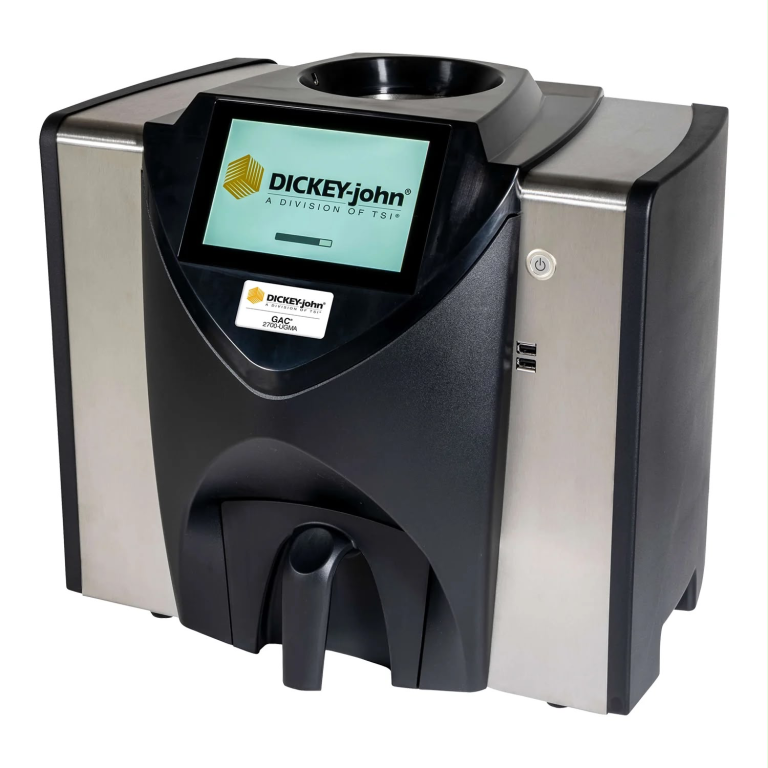
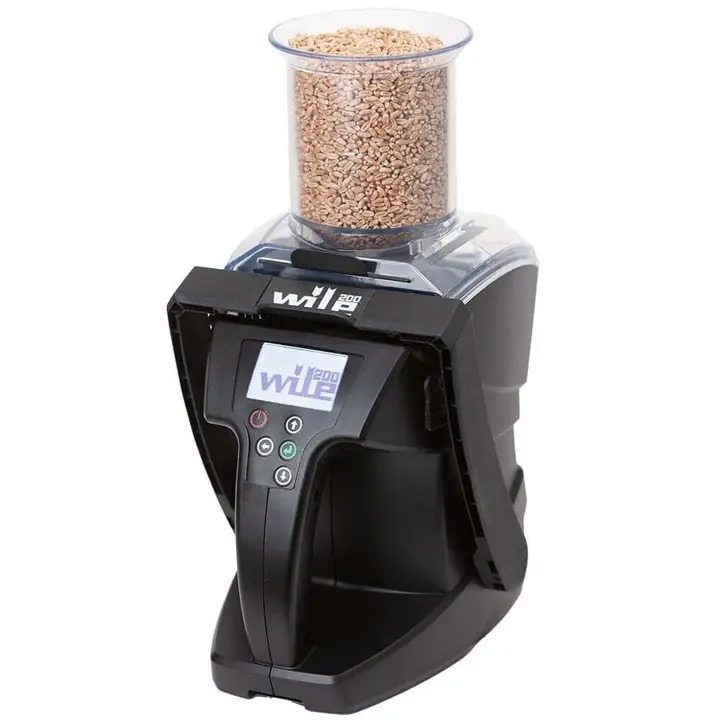
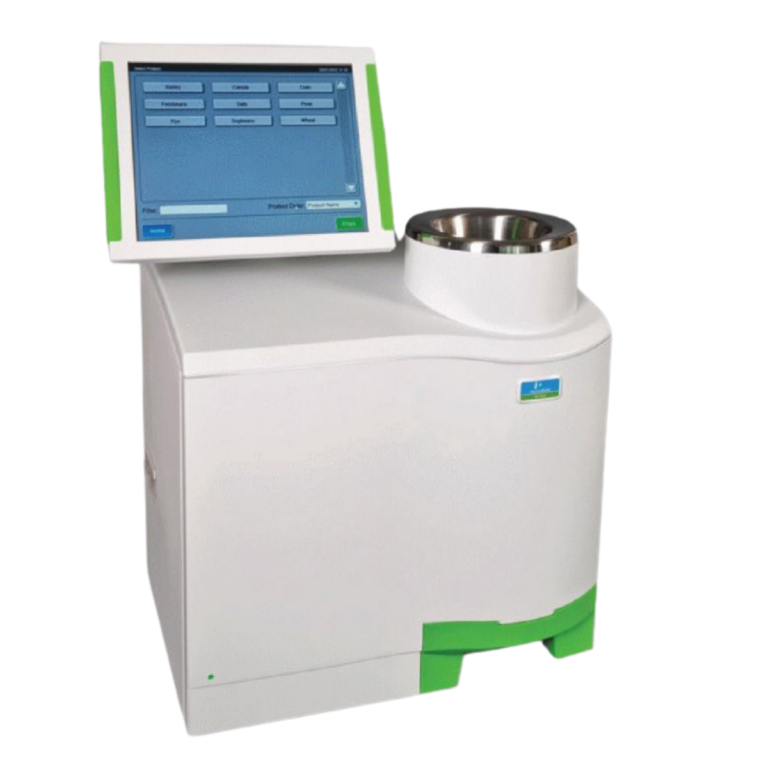
Grain moisture meter selectionstarts with the product and moisture range to be measured;point of use, number of samples per day, and need for validation are then evaluated. Humidity and dampness are words used to describe the same property in this context. Devices for grain, bales, cotton and ambient air should not be assumed to be interchangeable.
Portable, desktop or NIR: which device class?
| Need | Class to be evaluated | Pre-purchase check |
|---|---|---|
| Fast pre-inspection in the field and warehouse | Portable grain moisture meter | Product scales, temperature and filling method |
| Intensive vehicle acceptance | Desktop moisture meter | Sample flow, registration and reference comparison |
| Protein/composition with moisture | Suitable NIR/NIT system | Parameter and calibration list for each product |
| Bale or cotton | Material-specific probe/device | Material, density, compression and suitable measuring limit |
The selection table is not a model guarantee. The model's own bill of materials and measurement conditions must be verified before the final decision.
Seven questions to answer before bidding
- Which products will be measured;whole grain or ground?
- What moisture range is expected during the harvesting, drying or storage phase?
- How many samples and how many different operators will there be per day?
- Where and under what temperature conditions will the device be used?
- Is it just moisture? Is hectolitre, temperature or protein also required?
- How will the result be recorded and compared to what reference?
- What is the scope of calibration, maintenance, accessories and training?
The moisture range is not a single number for all products of the device. Version and country scales may differ. Resolution is also not the same concept as accuracy; The decimal place on the display alone does not indicate measurement uncertainty.
Correct sample conditions before instrumentation
Product schedule, hopper filling and temperature conditions must be consistent. Take samples representative of the lot; Divide appropriately and measure according to manufacturer's instructions. Do not directly compare the results of different forms of preparation.
Wile 55 practical moisture control; Wile 200 is for hectolitre and temperature information as well as moisture. Selection differences of the two Wile models Check it out. In case of intensive purchasing or different parameter needs moisture device category Evaluate other classes through.
How to verify the moisture result?
Appropriate subsamples prepared from the same sample are compared against the accepted reference method and the same reporting basis. Record ISO 712-1 for wheat and related products; For corn, the record ISO 6540 is related resources. The scope of the wheat method should not be automatically extended to corn.
The manufacturer's maintenance/adjustment requirement and the company's reference comparison plan are different matters. It cannot be said that all devices require mandatory annual tuning. In case of unexpected differences, the sample, product program and working conditions are first examined;behind technical evaluation of measurement difference is planned.
Prepare measurement plan according to product
Wheat moisture analysis And corn moisture measurement The guides explain the different implementation stages. Storage decisions should be made based on product temperature, duration and operating conditions, as well as moisture;A universal safe moisture percentage should not be assumed.
Specify the products and point of use in the quote request. If protein is also needed NIR/NIT device options and further evaluate the scope of calibration. For a second-hand device, ask for the model name as well as the inspection record and scope of delivery of the current device.
Resources and technical basis
Frequently Asked Questions
Are the moisture meter and the ambient moisture meter the same device?
No. The grain moisture meter uses appropriate calibration to evaluate the moisture of the product; Thermo-hygrometer measures ambient temperature and relative humidity.
Is the device more accurate if the screen resolution is higher?
Alone, no. Resolution, repeatability, proximity to the reference and application range are evaluated separately.
Do every grain moisture meter also measure protein?
No. Protein requires appropriate analysis method and calibration. Simple grain moisture meters should not be assumed to measure protein.