A correctly chosen one second hand analysercan accelerate laboratory investment; If the wrong device is selected, it may become more expensive than the new device with calibration, license, optical parts and service costs. Especially for second-hand NIR, protein, grain and moisture analysers, simply turning on and showing results is not a sufficient acceptance criterion.
Identify the need before the device
First write down the products, parameters, expected measurement range, number of samples per day and in what decision the result will be used. For example, the need of a small purchasing point that only requires wheat protein pre-screening is not the same as that of a laboratory reporting multiple parameters in flour and feed samples. Without a list of requirements, a seemingly “affordable” device easily turns into a bad investment.
Checkpoint 15 on second-hand analyser
- Serial number and year of manufacture: Verify that the label matches the software information.
- Working hours and usage history: If possible, find out the number of measurements, previous industry and environmental conditions.
- Service records: Request documentation for maintenance, malfunction, optical or mechanical parts replacement.
- Physical condition: Check for signs of corrosion, liquid contact, cracks, loose connections and improper repairs.
- Optical diagnostic test: Review lamp, detector, wavelength accuracy, noise, and manufacturer diagnostic results on the NIR system.
- Repeatability: Evaluate result scatter by repeatedly measuring the same homogeneous sample.
- Reference comparison: Compare known samples in the low, medium, and high range to the accepted laboratory method.
- Calibration list: Get written product/parameter, range, version and license status based on serial number.
- Software license: Verify installation media, license key, user authorization and update availability.
- Computer and operating system: Old devices may pose a communication and security risk with current systems.
- Accessories: List the sample container, adapter, grinder, printer, cable, UPS, and handling equipment.
- Consumables and spare parts: Ask about availability and estimated cost of lamp, gasket, filter and mechanical parts.
- Installation and training: Clarify field installation, operator training and documentation included in price.
- Warranty and service period: Get written information about which parts are guaranteed for how many months and the intervention conditions.
- Transport and insurance: Plan performance testing of the optical device after packaging, fixing and transportation.
How to do pre-purchase acceptance testing?
At least the following three-tier test should be applied:
1. Function test
Opening, screen, buttons, sample mechanism, temperature control, connections, printer and data transfer are tried. Error records are examined.
2.repeatability test
A homogeneous control sample is measured several times by repositioning the sample according to the procedure. Spread between repetitions;compared with the manufacturer's specification and the business's decision need.
3. Closeness to reference and coverage test
A low-medium-high value set representing real samples of the business is measured.A reliable reference laboratory result of the same sample is used. Not only the average difference, but also the behavior and product groups in the extreme range are examined.
The test result must be reported with serial number, software/calibration version, samples and environmental conditions; Acceptance criteria must be determined before testing.
Total cost of ownership, not sticker price
| Cost item | question to ask |
|---|---|
| Calibration | Are the necessary products included in the price? Is an additional license required? |
| software/computer | Is the license transferable, what is the supported operating system? |
| Setup | Are transportation, field installation and performance verification included? |
| Care | What is the expected maintenance and critical parts cost in the first year? |
| Downtime risk | Is there a backup device or response time? |
| Reference analysis | How many laboratory analyzes will be required for confirmation? |
Comparing these items over a three- to five-year period can reveal why a device that looks more expensive but is validated and service-supported carries lower risk.
Signs you should stop before buying
- Serial number or service history is not shared.
- The device is shown only by opening it; Samples and diagnostic tests cannot be performed.
- Calibrations are said to be available, but no name, version or license document is provided.
- Comparison with a known reference sample is not allowed.
- A copy of the software exists, but license transfer or update rights are unclear.
- Critical spare parts are no longer produced or service support is unavailable.
- Offer; It does not separate installation, training, accessories and warranty coverage.
Check out second-hand analysers or with the serial number and target application of the device you have request a technical evaluation. For your current device maintenance, performance control and technical service options You can also evaluate.
Items that must be included in the sales contract
- Brand, model, serial number and physical condition of the device
- Product/parameter name and version of included calibrations
- Software license, installation media and license transfer condition, if any
- Detailed list of computers, printers, sample containers and other accessories
- Responsibility for transportation, installation, device standardization and training
- Samples, methods and success criteria to be used in acceptance testing
- Warranty period, excluded parts and service intervention condition
- Correction, exchange or return procedure if acceptance test fails
The statement "The device will be delivered in working condition" alone is not sufficient. Which diagnostic test and which performance criteria will prove the working condition should be defined in the contract.
Post-installation commissioning plan
- Check for transport damage and package contents with the delivery report.
- Verify electrical, grounding, ambient temperature/humidity, and machine conditions.
- Run manufacturer diagnostic testing and device standardization if necessary.
- Re-measure the acceptance set before purchasing; Compare with pre-migration results.
- Configure user accounts, data backup, date-time and report template.
- Complete operator training to cover sampling, measurement, cleaning, error message and logging steps.
- Apply the condensed reference comparison plan for the first 30–90 day.
Data and cybersecurity in second-hand NIR devices
Older device computers may contain previous owner's data, shared passwords, or unsupported operating system. Create a data backup and safe cleaning plan with the authorized service upon device delivery. Renew user accounts without losing licenses; Remove unnecessary remote access software and restrict the device computer according to the business's network policy. If the old system will work offline, malware control with the result transfer method should also be connected to the procedure.
Which risks are prominent in which device class?
| Device class | Primary technical risk | priority document |
|---|---|---|
| NIR/NIT protein analyser | Optical performance, calibration and licensing | Diagnostic test and local verification report |
| grain moisture meter | Chamber, temperature sensor and product calibration | Reference comparison and maintenance log |
| Gluten/Falling Number | Mechanical parts, temperature and time control | Control sample retest |
| Sample preparation equipment | Wear, uniformity and safety | Maintenance record and function test |
Related guides
- NIR calibration and verification
- Grain analyser selection guide
- What does the protein determination device do?
Similar model name does not mean the same device
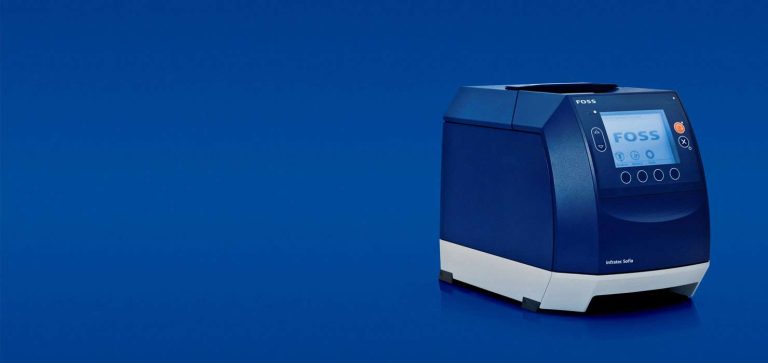
Inframatic Second-hand IM registration 9500 in the same model family as 9500 may represent separate device/sale terms. Mininfra Scan-T and Scan-T Plus are different sub-models. The manufacturer's history supports this distinction; Only the device label and technical record confirm which device is at hand.
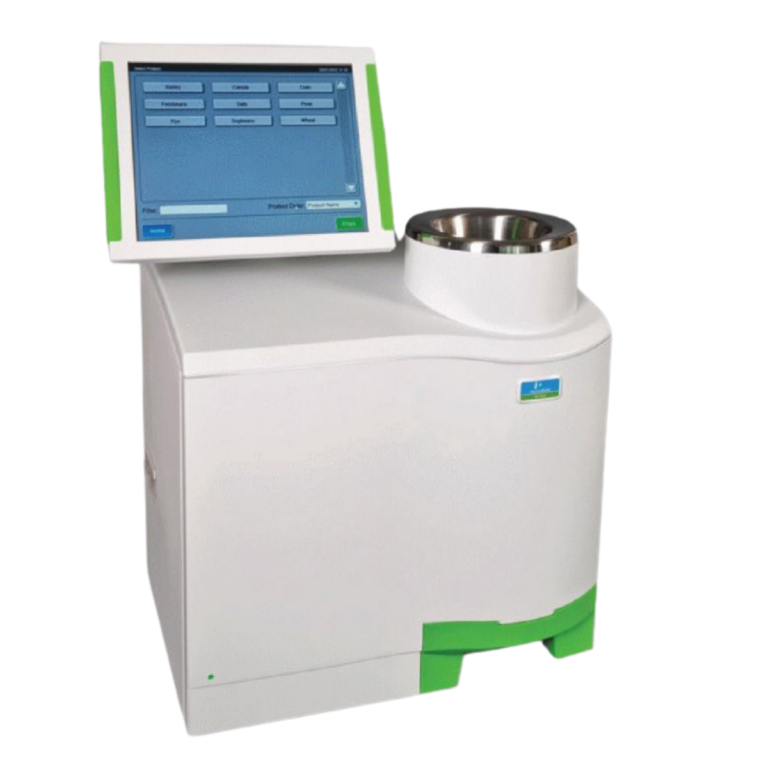
Request a list of hardware, software, calibrations and accessories based on serial number. The appearance of the sample carrier or computer in the photograph does not prove that it is included in the delivery package. Used protein analysers, second hand moisture devices And technical service evaluation Examine it together.
Resources and technical basis
Frequently Asked Questions
What is the most important control on a second-hand NIR?
Optical performance, diagnostic testing, calibration licenses, software compatibility, and reference comparison with your samples must all be evaluated before the device appears to be working.
Do calibrations come automatically with the device?
Not always. Calibration licenses, region/product coverage and transfer rights may depend on manufacturer and device configuration. The calibration name and version must be clearly written in the offer.
Should I test with my own sample before purchasing?
Yes. Repeatability and closeness to reference control with a few samples with a known reference value representing the expected operating range significantly reduces risk.