TRUE flour analyser selection, “which device shows more parameters?”It starts with defining which production decision will be made before the question. Even if bread flour, biscuit flour and pasta products have the same protein value, they may not show the same performance. Therefore, protein, moisture, ash, gluten and falling number;should be interpreted together with the target BOM and process behavior.
Basic quality parameters in flour analysis
Protein
Protein ratio is an important indicator in determining the usage class of flour; However, it does not explain protein quality alone. Different wheat varieties or process conditions may show different dough behavior at the same protein percentage. Results must be reported on a wet/dry matter basis and the conversion factor used must be defined.
Moisture
Moisture; It affects the calculation basis of storage, shelf life, mass balance and other parameters. Leaving the sample in an open container or measuring it before it reaches laboratory temperature may cause deviation.ISO 712-1:2024 covers the routine reference moisture method for grains and flours.
Ash
Ash is an indicator of mineral content and is used in flour classification by milling extraction.ISO 2171:2023; It defines the determination of ash yield by burning method in grain, flour, semolina, bran and similar grinding products.
Fresh gluten and gluten index
The amount of fresh gluten depends on the protein fraction that forms gluten; The gluten index provides information about the strength of gluten under mechanical method conditions.ISO 21415-2:2026 published in 2026 covers the determination of wet gluten and gluten index in wheat flour and appropriately milled wheat.
number of falls
The Hagberg-Perten falling number gives indirect information about alpha-amylase activity through viscosity. The suitability of a low or high result depends on the target product. The same value may be interpreted differently in the application of bread, biscuits or noodles; The business must verify the acceptance range with its own product performance data.
Recommended analysis flow from sample acceptance to report
- Identify the sample: Record supplier, lot, mill line, silo, shift and time information.
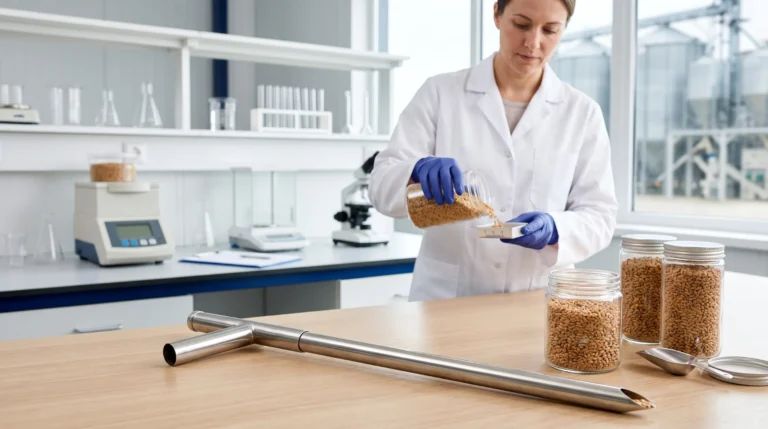
- Take a representative example: Get regular increments from the flow; Use proper division method when lowering into laboratory sample.
- Fix conditioning: Let the sample container, waiting time, temperature and, if necessary, grinding fineness be defined in the procedure.
- Do a quick scan: Measure protein, moisture, ash and related parameters with the validated NIR calibration.
- Verify risk based: Check specification limit, unusual or new supplier/variety results against the reference method.
- Decide the outcome: Let the authorized person approve the acceptance, blending, silo routing, process adjustment or rejection action.
Where does the NIR analyser provide value?
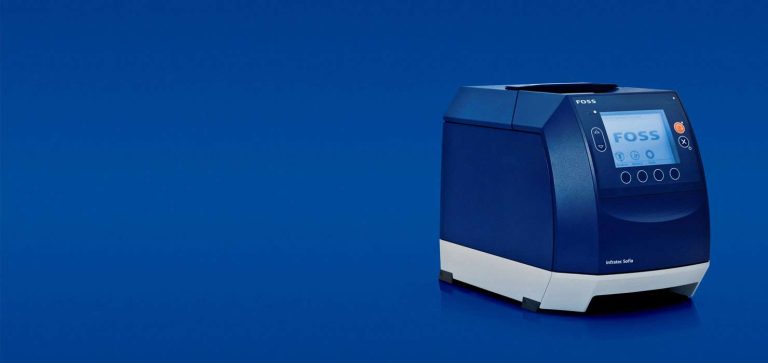
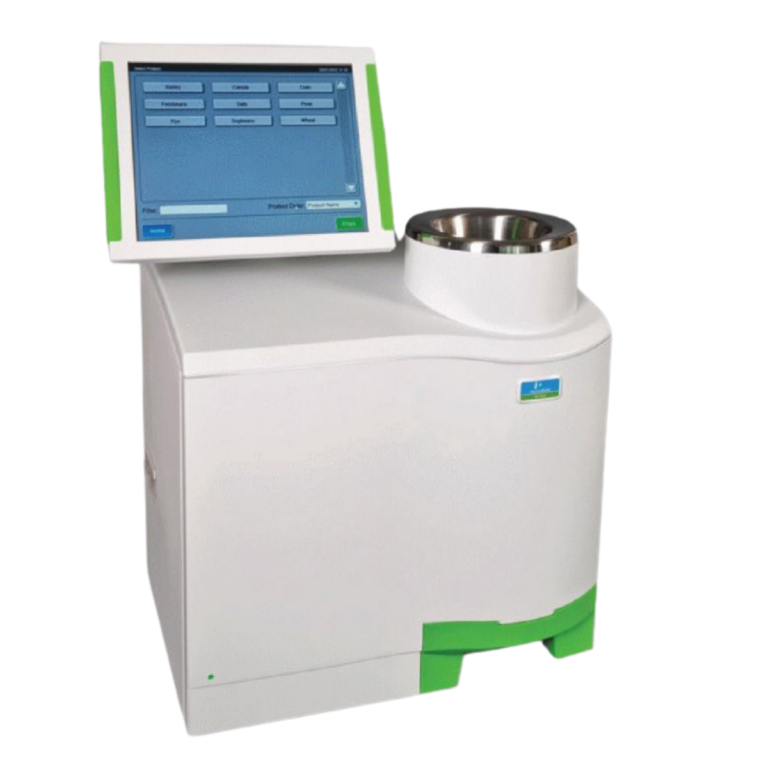
The NIR device manages intense sample flow without using chemical reagents and by estimating multiple parameters in a short time. Directing the raw material to the silo provides a great advantage in monitoring the mill flow and pre-controlling the final product. With this:
- The calibration must be representative of the flour types and parameter range measured.
- Sample container, fill height, grind and temperature should be consistent.
- The method performance of the reference laboratory should be monitored.
- Verification must be repeated after a calibration update, maintenance or new season.
For calibration management NIR device calibration and verification guide you can use
Which flour analysers are needed?
| Need | solution class | Selection criteria |
|---|---|---|
| Fast protein/moisture/ash screening | NIR/NIT analysis system | Flour calibration, range, verification performance |
| Fresh gluten and gluten index | Glutomatic type system | Washing, centrifuge and drying workflow |
| Alpha-amylase activity | Falling Number system | Standardized temperature, mixing and time control |
| Ash reference analysis | Muffle furnace and gravimetric equipment | Temperature uniformity, weighing and method compatibility |
| dough behavior | rheology systems | Target product and method standard |
Grain and flour analysis devices And NIR analysis systems Evaluating together helps combine rapid screening and reference verification into one quality plan.
Where to start if the results don't hold up?
| Problem | Control | Solution |
|---|---|---|
| NIR protein persistently high | Dry/wet base, conversion factor, reference method | Method comparison and bias examination in the same sample |
| Ash repetition is weak | Sample homogeneity, weighing, combustion condition | Verify grinding/mixing and oven procedure |
| Gluten index variable | Washing water, duration, centrifuge, operator | Control sample and standard operating instruction |
| The number of drops is unexpected | Sample amount, water, altitude/temperature correction, device | Check method conditions and analyze again |
| Same lot different result | Sampling and splitting | Review the combined sample plan and sample divider |
Applicable quality control plan
A good plan; For each parameter, it defines the method, instrument, frequency, sample point, acceptance range, measurement uncertainty, repeat rule, and authoritative judgment. Daily rapid NIR results can be viewed on a control chart; Reference analyzes can be increased at risk-based intervals and deviation triggers. Thus, the laboratory turns into a system that not only produces results but also catches process changes early.
By sharing product type, daily sample count and target parameters Get an offer for the device combination suitable for your flour quality control laboratory.
Examples of interpreting parameters together
Protein is suitable, gluten performance is poor
Even if the total protein amount meets the specification, the targeted dough structure may not be formed due to gluten quality, variety, sunn pest damage, storage or process effects. Wet gluten, gluten index and, if necessary, rheology results should be examined together.
Protein result disputed due to moisture change
If protein is reported on a wet basis, moisture variation may affect the percentage result at the same dry matter content. Verify that NIR and the reference laboratory use the same calculation basis. Waiting for the sample in an open container may also make a difference between the two analyses.
Ash rising, protein steady
Mill extraction or bran particle distribution may have changed. Line/flow patterns and mill settings should be examined; It should be verified that the sampling point represents the same part of the process.
Low falling number, dough is sticky
The possibility of high enzyme activity should be evaluated together with process and end product performance. Once the sample mix, method condition, and instrument control are verified, actions such as blending or process adjustment are determined by the quality officer.
Laboratory layout and sample flow
Separate sample acceptance, grinding/preparation, rapid analysis, and chemical/thermal reference analysis areas to prevent mixing. Reduce the impact of dusty grinding area on optical devices. Code sample containers individually; Maintain tracking of split samples between NIR and the reference laboratory. Provide the environmental requirements of the scale, oven, muffle furnace and NIR separately.
The order of sample acceptance and visible control first, followed by homogenization/splitting, rapid screening, risk-based reference analysis, and reporting can be used to reduce flow reversal. The repeat and approval process of out-of-specification samples should also be physically separated.
Reporting and decision rule
Report; It should include the product/lot, sample method, instrument, calibration version, unit of result and basis of calculation, replicates and date of analysis. In case of results very close to the acceptance limit, the verification performance of the device and method uncertainty should not be ignored. It should be written in the procedure on which tolerance or uncertainty rule the automatic decision “measured value is below/above the limit” is based.
Sample check frequency plan
- Each lot: Quick NIR protein/moisture screening and visible sample control.
- Shift or risk based: Control sample and repeat analysis on selected lots.
- Periodic: Comparison of NIR results with reference protein, moisture and ash methods.
- In case of product/process change: Expanded panel depending on the intended use, such as gluten, falling number and rheology.
- In case of deviation/complaint: Independent repeat and root cause analysis with sealed storage sample.
Separate physical quality tests with NIR output
Just because a NIR calibration results in gluten or ash does not mean that the same device performs ash determination by incineration or mechanical gluten index testing. In the production decision, it should be clear in the report which result is the quick estimate and which is the relevant reference/physical test result.
In the XGrain/SGrain factory list, wheat flour application is evaluated in a separate cuvette. The result list for wheat grain cannot be carried over to all flour or feed recipes. Application of XGrain, SGrain cuvette and calibration scope And complementary laboratory equipment should be planned together.
Resources and technical basis
Frequently Asked Questions
Does protein content alone determine flour quality?
No. Although the amount of protein is important, gluten quality, ash, moisture, enzyme activity, water removal and suitability of the product for its target use should be evaluated together.
What values can the NIR device measure in flour analysis?
With proper and validated calibration, it can quickly estimate protein, moisture, ash, and other model-dependent parameters. The calibration scope for each parameter and product matrix must be verified separately.
What does it mean if the number of falls is low?
It is often associated with high alpha-amylase activity; However, the interpretation should be made in conjunction with the target product, method conditions and operating specification. No definitive judgment about product performance should be made based on a single result.