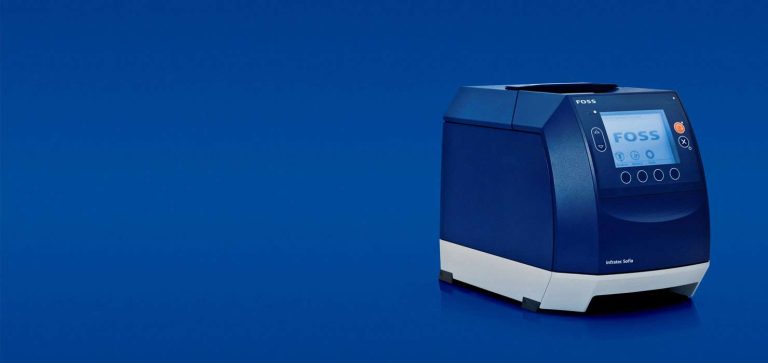
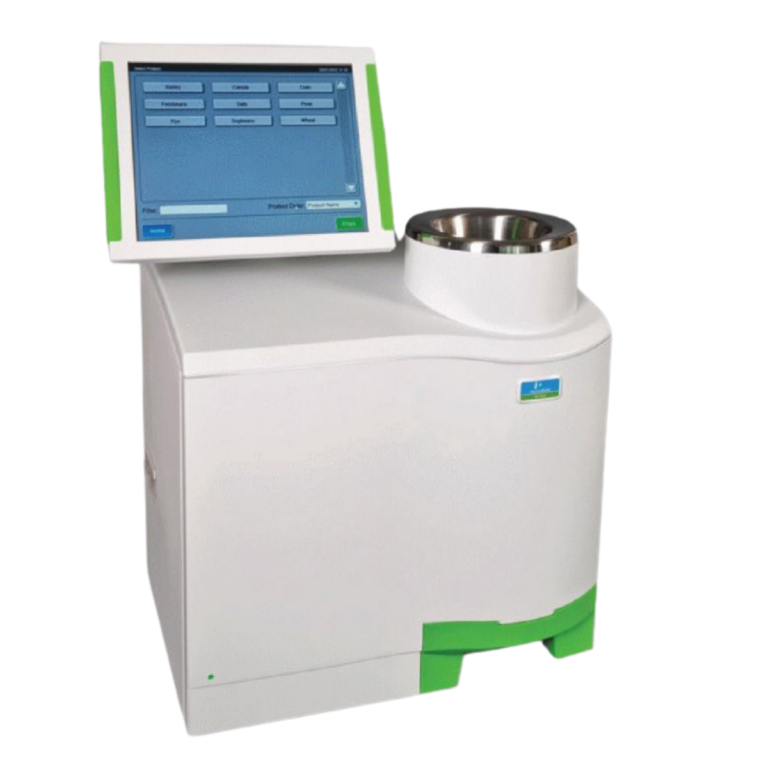
NIR analyseris a rapid analysis system that measures the interaction of the sample with near-infrared light and estimates protein, moisture and other components with appropriate calibrations. The sample type and installed calibration determine as much as the device name which results can be obtained on the screen.NIT refers to the measurement setup in this family of technologies based on passing light through the sample.
How does the NIR analyser work?
The device sends light into the sample and records the optical response as a spectrum. The calibration model uses the relationship between this spectrum and reference laboratory results. In routine measurement, the spectrum of the new sample is applied to the model; The validity of the result depends on the product and operating range that the model represents.
- Identify the sample and prepare it according to the model.
- Choose the correct product/parameter calibration.
- Ensure filling, cuvette and measuring conditions in accordance with the manufacturer's instructions.
- Record the result with unit, reporting basis, and sample ID.
- Compare samples in the control plan to reference results.
Measuring a sample repeatedly indicates repeatability. The fact that these repetitions are close to each other does not alone prove that the result is close to the reference.
What is the difference between NIR and NIT?
NIR is the general term covering analysis in the near infrared region;NIT indicates the transmittance, that is, the light transmission pattern.NIR and NIT should not be considered as two competing chemical methods.
| Order | What is measured? | Control in election |
|---|---|---|
| Transmittance / NIT | Light passing through the sample | Grain structure, optical path and proper calibration |
| reflectance | Light reflected from the sample | Surface, particle distribution and preparation |
| Both approaches | Result prediction by calibration from spectrum | Product, parameter, reference and verification scope |
Whole grain, flour and ground feed do not require the same sample submission. The appropriate measuring setup and container must be selected as part of the actual application.
What parameters does the NIR measure?
Protein, moisture, fat and starch can be evaluated with appropriate product calibrations. Outputs such as gluten, ash or Zeleny should also only be considered within the context of the supported sample and calibration. The parameter list defined for one product cannot be transferred to another product.
For example, in the XGrain/SGrain factory list, wheat and wheat flour are separate applications; This requires a suitable bathtub. Gluten estimation does not mean that gluten washing and gluten indexing are done automatically. Hectoliter weight is also not the same measurement as the optical composition result;XGrain has internal module, standard SGrain does not.
Why are calibration and reference analysis necessary?
Calibration does not mean that the device recognizes every product unconditionally.A new variety, different region, unusual moisture, or a change in sample preparation may require verification. The reference method, reporting basis and acceptance criteria should be defined before comparison.
ISO is one of the relevant standards resources for 12099, NIR applications. In practice, sample preparation, control samples and change records are managed together. Review calibration and independent verification steps.
What information should you prepare when choosing a NIR device?
- Full product list and grain/flour/milled form of the sample
- Required parameters and expected range for each product
- Number of samples per day, measurement location and user pattern
- Accepted reference method and reporting basis
- Hectolitre, printer, data transfer and accessory needs
For hectolitre requirement at fixed receiving point XGrain;for different operating points SGrain can be examined. Model decision XGrain–SGrain comparison And NIR device category Complete through.
Resources and technical basis
Frequently Asked Questions
Does the NIR measure all products with the same calibration?
No. Calibration appropriate to the product, sample form, parameter and operating range is required; The new application must also be verified.
Does the NIR always perform the analysis without changing the sample?
Optical measurement does not require chemical reagents;however, some applications require grinding, splitting, or cuvette preparation. Sample recovery depends on the workflow.
How many seconds does the NIR device take to produce results?
Duration depends on model and application. The XGrain and SGrain product sheets specify approximately one minute of analysis; Sample preparation and recording time are planned separately.